
.jpg)
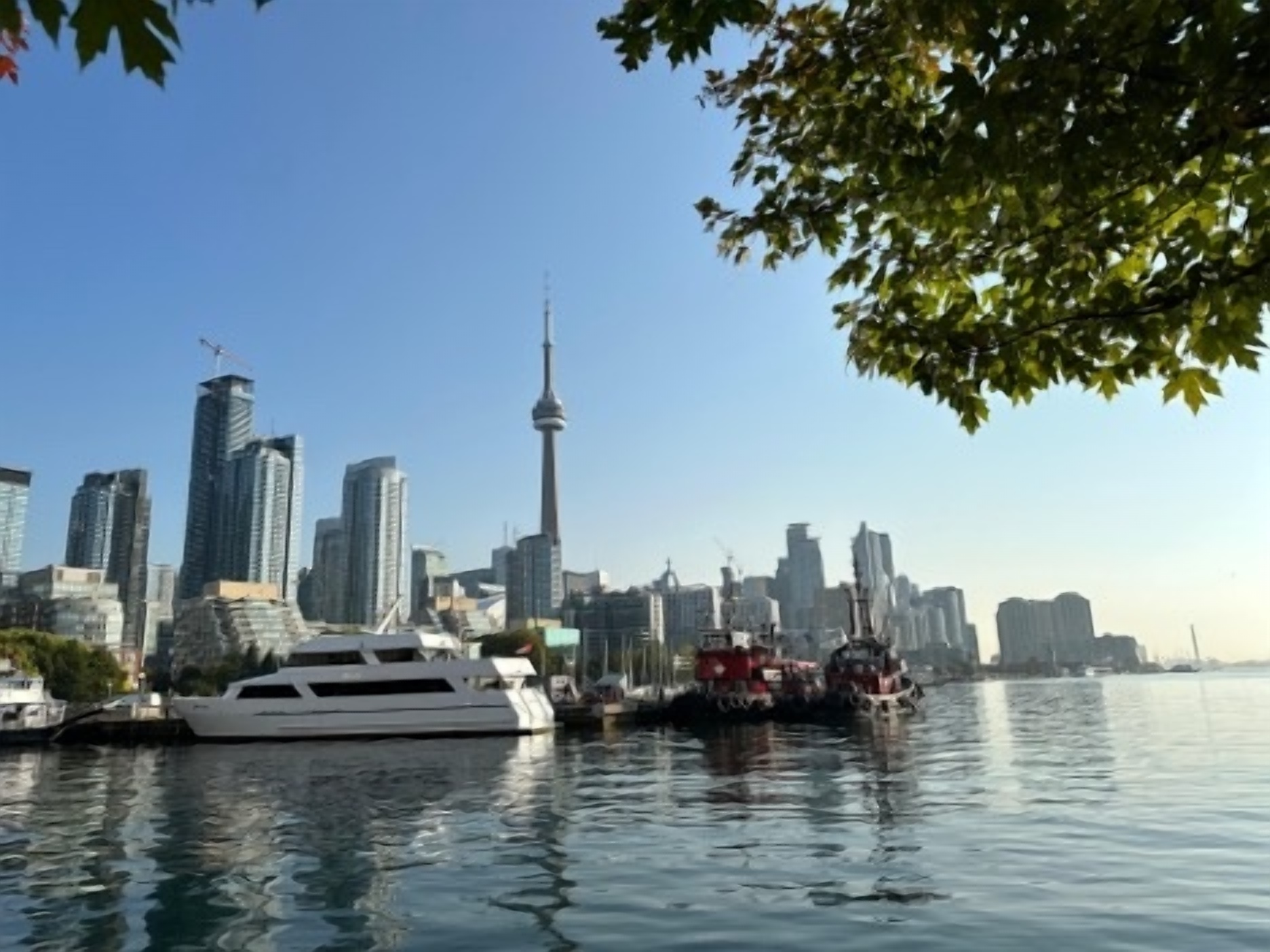
Photograph depicting the Toronto skyline, by Shweta Sharma
The conference will be held at the Sheraton Centre Toronto Hotel located in downtown Toronto. You may choose to stay at the Sheraton at the 4S conference rate, if you book before Sept. 11, 2026. See below for this and some other nearby options.
Transportation
The Toronto Pearson International Airport (YYZ) is on the outskirts of the city, about 30 km from the downtown. (There is also a downtown airport with connections to various US and Canadian cities.) The most efficient way of getting between the airport and the Sheraton Centre is on the Union Pearson Express (UP Express) train, which will take you, with only a few stops between, to Union Station (rail and bus). The Sheraton Centre is only 1 km from Union Station, so a quick taxi or walk.
The Sheraton is close to two subway stations, Osgoode and Queen. It’s also on the Queen streetcar line (501). Fares for the subway and streetcar system can be paid with debit and credit cards, and with cash at some entry points to the system. Take paper transfer receipts (“transfers”) if you are combining streetcar and subway travel.
Bike Share Toronto has a large number of bicycle stations spread across the city, including six stations within a block of the Sheraton. You may pick up a bike at one station and return it to another. To use a bike, you have to download the app onto your phone, and follow instructions. There is an inexpensive pay-as-you-go way to access the bikes.
In addition, Toronto is a walkable city—a city of neighbourhoods. The Sheraton itself is at the edge of the business district, but it is surprisingly close to one of the city’s Chinatowns or to the ever-changing Queen Street West.
Please contact meeting@4sonline.org with any accessibility questions.
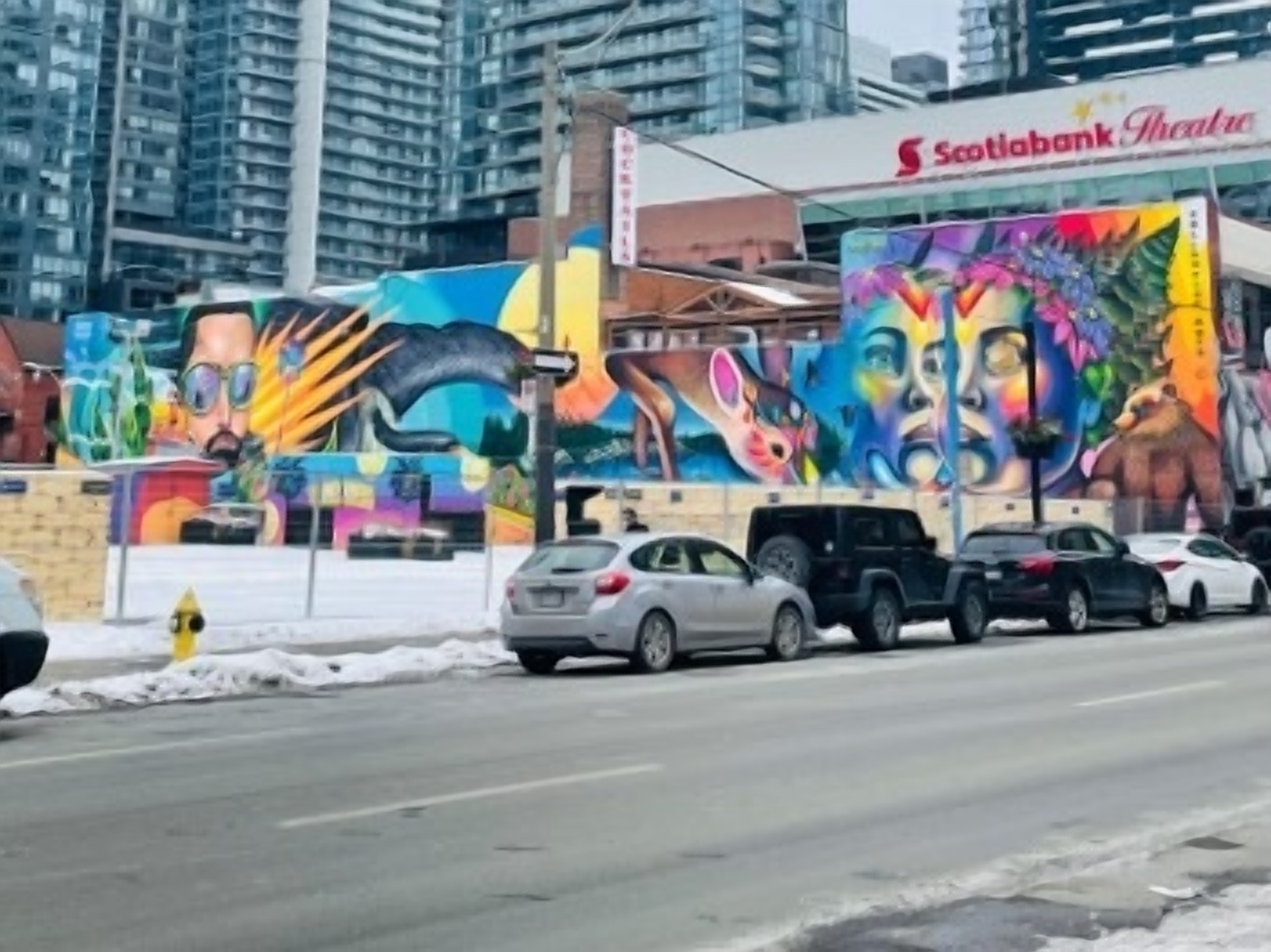 Graffiti outside the Scotiabank Theatre on Richmond Street. Photograph by Simran Kaur.
Citizens and residents of a number of countries will need a short-term visa or electronic travel authorization to enter Canada for the conference. Check early what kind of documents you need, and how to apply for them.
Depending on where you begin your travels, the most convenient route may be via the United States. The situation with US border control is currently unpredictable. Attendees are encouraged to consult their own countries’ travel advice.
If you require a visa and if you need a letter confirming your participation in the conference, please write to us (meeting@4sonline.org). We will be happy to support your application.
Title your email "Visa Letter Request, Toronto 26" and include the following details:
Full name (first and last name); suffix (Dr, Ms); job title (i.e., Dr, and Assistant Professor of [add]); job title (i.e., Dr, and Assistant Professor of [add]); affiliation (University of, Society of); affiliation (University of, Society of); and your membership ID.
We have secured discounted rates at the following hotels that are all within easy walking distance of the Sheraton Centre conference venue. Please note that all hotel rooms associated with these prices are being offered through a limited inventory.
***Stay at the conference location!
Marriott Downtown at Toronto Eaton Centre
Cancellations: Guestroom reservations may be cancelled up until 72 hours local time prior to arrival with no penalty. Cancellations received after this time will be subject to one night’s room & tax, applied to the credit card used to guarantee the reservation.
Cancellations: Guestroom reservations may be cancelled up until 72 hours local time prior to arrival with no penalty. Cancellations received after this time will be subject to one night’s room & tax, applied to the credit card used to guarantee the reservation.
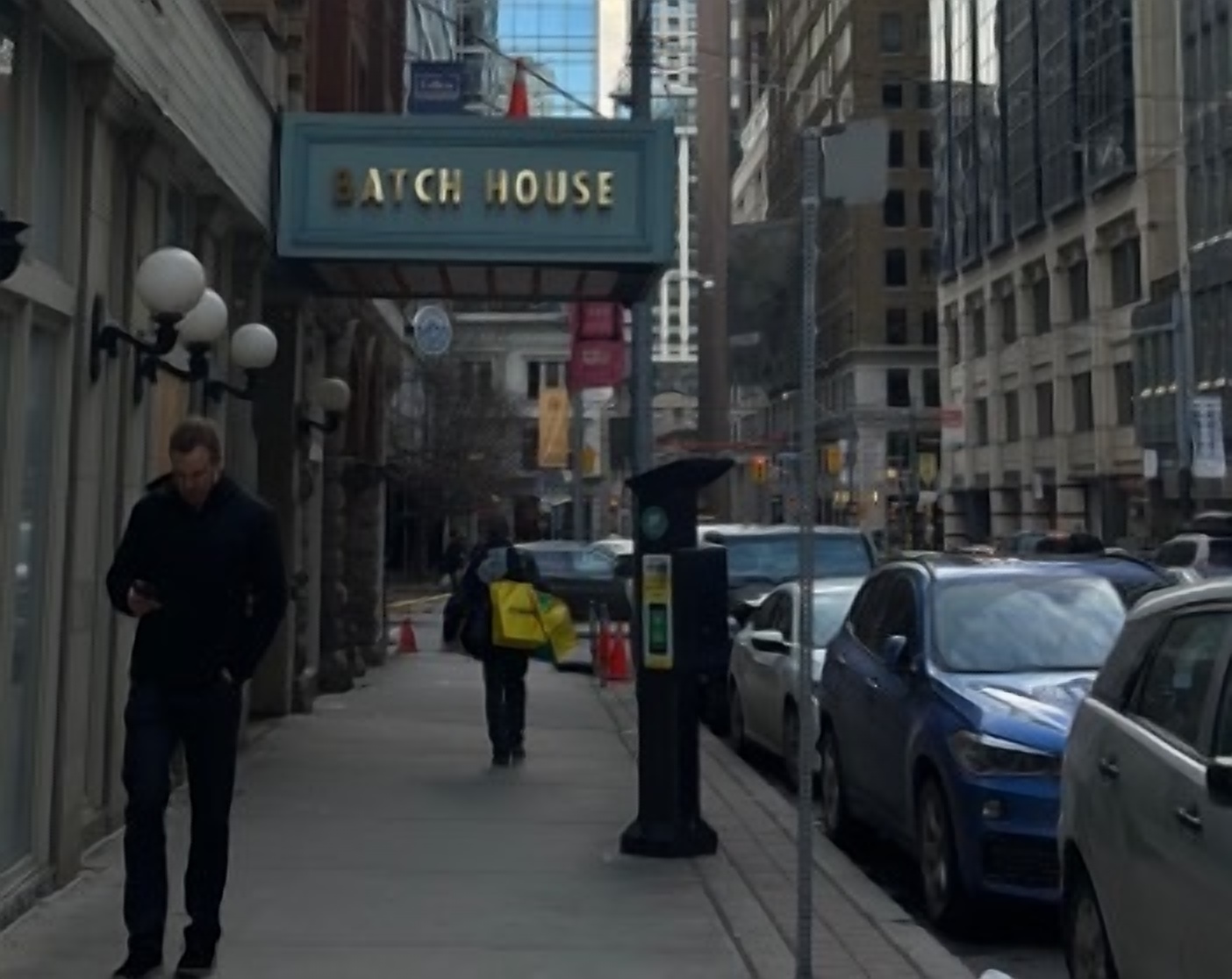
The financial district is full of speakeasys and local breweries in historic buildings.
Photograph of the iconic Batch House by Shweta Sharma.
Toronto has many excellent cafés, restaurants and bars, at a range of budgets. Come back to this site in the summer or fall for some of our recommendations.
If you have a break in your conference schedule or a free evening, Toronto’s mix of institutions, architecture, and neighbourhoods offers many ways to experience the city beyond the conference.
Toronto’s neighbourhoods are among its most compelling attractions. Kensington Market is a dense, walkable area known for independent shops, vintage stores, and street food, while Chinatown nearby offers everything from bakeries to late-night noodle spots. Little Italy and the surrounding College Street area are lively in the evenings, with restaurants, bars, and small music venues. Queen West and Ossington are known for their galleries, design shops, and creative studios, reflecting Toronto’s part as a city for arts and culture. For those interested in migration, infrastructure, and everyday urban life, these neighbourhoods offer rich sites to explore some of the city’s social and cultural diversity.
The Royal Ontario Museum (ROM) and the Art Gallery of Ontario (AGO) anchor the city’s museum landscape, housed in architecturally ambitious buildings that invite critique and reflection. Beyond the obvious, there are many more specialized museums, focusing on material from ceramics and textiles to hockey and television. If the weather is good and you want to be a real tourist, take in panoramic views from the CN Tower. Toronto’s waterfront and park system offer walking paths, lake views, and public art installations, making it easy to get outside without leaving the downtown area. Or, visitors can explore the historic Distillery District, known for its preserved Victorian industrial architecture, galleries, and cafés.
©2026 Society for Social Studies of Science